Buy sportlust46.eu ?
We are moving the project
sportlust46.eu .
Are you interested in purchasing the domain
sportlust46.eu ?
domain@kv-gmbh.de · 0541-91531010
Buy sportlust46.eu ?
Is it competitive or non-competitive inhibition?
It is non-competitive inhibition. This is because the inhibitor binds to an allosteric site on the enzyme, which is different from the active site where the substrate binds. This type of inhibition does not compete with the substrate for binding to the enzyme, hence the name non-competitive inhibition. **
What is the training for competitive swimming?
Training for competitive swimming typically involves a combination of swimming drills, strength training, and conditioning exercises. Swimmers will often focus on improving their technique, endurance, and speed through a variety of workouts both in and out of the water. Training may also include interval training, sprint work, and distance swimming to help swimmers develop the necessary skills for competition. Additionally, swimmers may work with coaches to create personalized training plans that cater to their specific strengths and weaknesses. Overall, competitive swimming training is rigorous and requires dedication, discipline, and hard work to achieve success in the sport. **


Similar search terms for Competitive
Top-Angebote
Products related to Competitive:
-
Stonemaier Games Viticulture: Essential Edition - Strategic Board Game for Competitive PlayBuild a Tuscan wine-making empire in Viticulture: Essential Edition, a strategic board game where you take on the role of a vineyard owner in rustic, pre-modern Tuscany. Develop your estate, plant vines, harvest grapes, and turn them into wine while competing to fulfill valuable orders. This game challenges you to plan across the seasons, carefully assigning workers and specialists to improve your vineyard and balance immediate opportunities with longer-term growth. Each decision can influence the efficiency and prosperity of your winery. The Essential Edition includes refined cards and rules for an updated playing experience, offering a rich tabletop experience for players who enjoy planning, resource management, and strategic decision-making.45,95 £*Shipping: 3,95 £Secure redirect to the provider
-
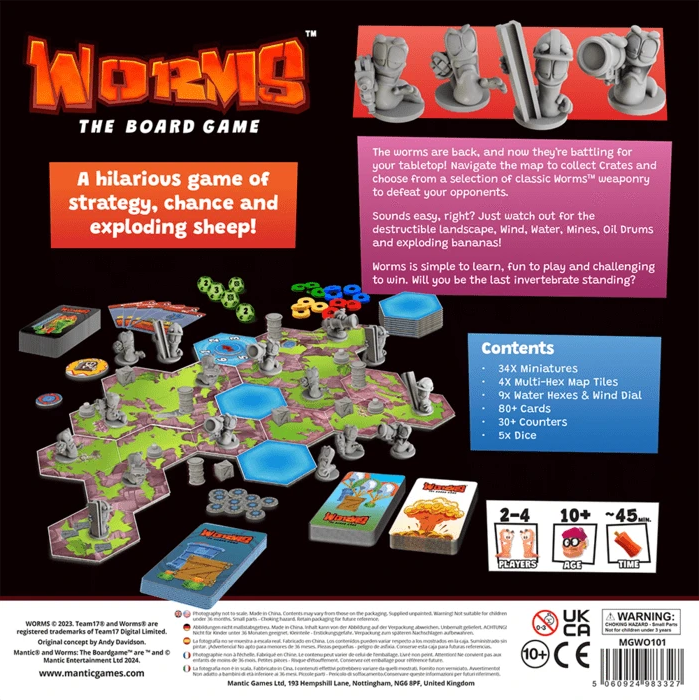
Mantic Games Worms: The Board Game - Competitive Strategy Game for AdultsPlayers command teams of Worms across a hex-based battlefield, gathering crates, avoiding mines, and choosing the right weapons to outmanoeuvre opponents. Designed for competitive tabletop play and family game nights.41,80 £*Shipping: 3,95 £Secure redirect to the provider
-
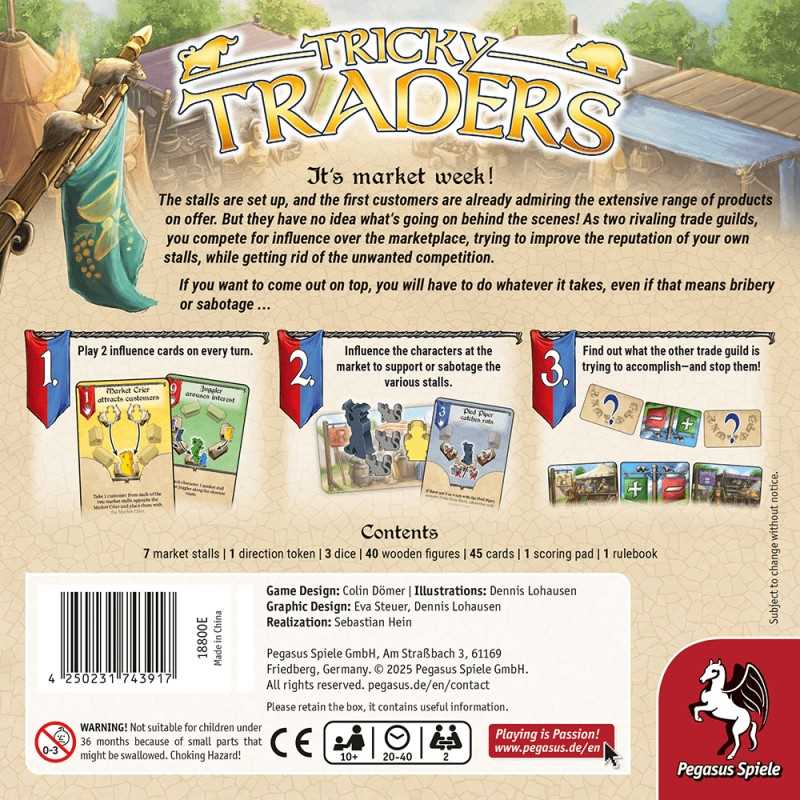
Pegasus Spiele - Competitive Two-Player Board Game - Ages 10+ - Tricky TradersTwo players compete to influence a lively marketplace filled with customers, rats, and rival characters. Each player moves pieces between seven stalls, using the activity around the market to create opportunities and disrupt the plans of the opposing player. The crowded market makes underhand tactics possible. Players must weigh each move carefully, manipulating the flow of visitors and characters while attempting to improve their own position and interfere with their opponent’s plans. The result is a focused two-player contest combining tactical movement, observation, and opportunistic play.20,61 £*Shipping: 3,95 £Secure redirect to the provider

-
Will the competitive eaters vomit their food after the competition?
It is possible for competitive eaters to vomit after a competition, as their bodies may struggle to handle the large amount of food consumed in a short period of time. However, not all competitive eaters will vomit, as some have developed techniques to minimize the risk of regurgitation. Vomiting can also depend on the individual's physical condition and how their body reacts to the extreme eating challenge. Overall, while vomiting is a possibility, it is not a guaranteed outcome for all competitive eaters. **
-
What does competitive eater Matt Stonie do after a competition?
After a competition, competitive eater Matt Stonie typically takes some time to rest and recover from the intense eating challenge. He may also film a post-competition video for his YouTube channel, where he shares behind-the-scenes insights and reactions to the event. Additionally, he may engage with his fans on social media, sharing updates and interacting with his followers. Overall, he focuses on recuperating and connecting with his audience after a competition. **
-
How does competitive karate training differ from regular training?
Competitive karate training typically involves a higher intensity level and focus on specific techniques and strategies needed to succeed in tournaments. It often includes sparring sessions and drills that simulate competition scenarios. Regular training, on the other hand, may focus more on overall fitness, self-defense techniques, and forms practice. Competitive karate training also places a greater emphasis on physical conditioning and mental preparation to perform at a high level in tournaments. **
-
What is the difference between competitive and non-competitive inhibition?
Competitive inhibition occurs when a molecule competes with the substrate for the active site of the enzyme, thus reducing the enzyme's ability to bind with the substrate. Non-competitive inhibition, on the other hand, occurs when a molecule binds to a site on the enzyme other than the active site, causing a conformational change in the enzyme that reduces its activity. In competitive inhibition, increasing the substrate concentration can overcome the inhibition, while in non-competitive inhibition, increasing the substrate concentration does not alleviate the inhibition. **


How much training is common in competitive sports?
In competitive sports, athletes typically undergo extensive training to improve their skills, strength, endurance, and overall performance. The amount of training can vary depending on the sport, the level of competition, and the individual athlete's goals. Professional athletes may train for several hours each day, including both physical conditioning and skill-specific practice. Additionally, athletes often engage in regular strength and conditioning workouts, as well as mental and tactical preparation. Overall, the level of training in competitive sports is typically quite high in order to achieve success at the highest levels of competition. **
How can the soccer training for the C-youth in the competitive league be improved?
The soccer training for C-youth in the competitive league can be improved by focusing on individual skill development, tactical understanding, and physical conditioning. Coaches should design training sessions that incorporate drills and exercises to improve ball control, passing, shooting, and dribbling. Additionally, players should be taught the importance of positioning, teamwork, and decision-making on the field. Finally, incorporating strength, speed, and agility training into the program can help players improve their physical abilities and reduce the risk of injury. Overall, a well-rounded and focused training program can help C-youth players in the competitive league improve their skills and performance on the field. **
Top-Angebote
Products related to Competitive:
-
Grail Games Fantasy Brewers Competitive Strategy Board Game - Brewmaster EditionImmerse yourself in the world of Fantasy Brewers, a competitive strategy game where you take on the role of a dwarven Brewmaster. Set during the build-up to the Orctober BeerFest, each player develops a brewery, manages a farm, and directs a team of workers to create the most successful drinks. Players place workers to carry out actions, adapt their plans as they buy and sell goods, brew beer, distill whisky, and improve their facilities. Resources must be managed carefully, with opportunities to extend the brewery, recruit additional helpers, and decorate for the approaching festival. The game is won by earning Victory Points through brewery decisions and festival preparations. The player with the most Victory Points at the end wins the Golden Stein and the title of champion brewer. This game combines resource management and economic decision-making with a unique theme, making it a great addition to any board game collection.33,54 £*Shipping: 3,95 £Secure redirect to the provider
-
Stonemaier Games Viticulture: Essential Edition - Strategic Board Game for Competitive PlayBuild a Tuscan wine-making empire in Viticulture: Essential Edition, a strategic board game where you take on the role of a vineyard owner in rustic, pre-modern Tuscany. Develop your estate, plant vines, harvest grapes, and turn them into wine while competing to fulfill valuable orders. This game challenges you to plan across the seasons, carefully assigning workers and specialists to improve your vineyard and balance immediate opportunities with longer-term growth. Each decision can influence the efficiency and prosperity of your winery. The Essential Edition includes refined cards and rules for an updated playing experience, offering a rich tabletop experience for players who enjoy planning, resource management, and strategic decision-making.45,95 £*Shipping: 3,95 £Secure redirect to the provider
-
Is it competitive or non-competitive inhibition?
It is non-competitive inhibition. This is because the inhibitor binds to an allosteric site on the enzyme, which is different from the active site where the substrate binds. This type of inhibition does not compete with the substrate for binding to the enzyme, hence the name non-competitive inhibition. **
-
What is the training for competitive swimming?
Training for competitive swimming typically involves a combination of swimming drills, strength training, and conditioning exercises. Swimmers will often focus on improving their technique, endurance, and speed through a variety of workouts both in and out of the water. Training may also include interval training, sprint work, and distance swimming to help swimmers develop the necessary skills for competition. Additionally, swimmers may work with coaches to create personalized training plans that cater to their specific strengths and weaknesses. Overall, competitive swimming training is rigorous and requires dedication, discipline, and hard work to achieve success in the sport. **
-
Will the competitive eaters vomit their food after the competition?
It is possible for competitive eaters to vomit after a competition, as their bodies may struggle to handle the large amount of food consumed in a short period of time. However, not all competitive eaters will vomit, as some have developed techniques to minimize the risk of regurgitation. Vomiting can also depend on the individual's physical condition and how their body reacts to the extreme eating challenge. Overall, while vomiting is a possibility, it is not a guaranteed outcome for all competitive eaters. **
-
What does competitive eater Matt Stonie do after a competition?
After a competition, competitive eater Matt Stonie typically takes some time to rest and recover from the intense eating challenge. He may also film a post-competition video for his YouTube channel, where he shares behind-the-scenes insights and reactions to the event. Additionally, he may engage with his fans on social media, sharing updates and interacting with his followers. Overall, he focuses on recuperating and connecting with his audience after a competition. **
Similar search terms for Competitive
-
Mantic Games Worms: The Board Game - Competitive Strategy Game for AdultsPlayers command teams of Worms across a hex-based battlefield, gathering crates, avoiding mines, and choosing the right weapons to outmanoeuvre opponents. Designed for competitive tabletop play and family game nights.41,80 £*Shipping: 3,95 £Secure redirect to the provider
-
Pegasus Spiele - Competitive Two-Player Board Game - Ages 10+ - Tricky TradersTwo players compete to influence a lively marketplace filled with customers, rats, and rival characters. Each player moves pieces between seven stalls, using the activity around the market to create opportunities and disrupt the plans of the opposing player. The crowded market makes underhand tactics possible. Players must weigh each move carefully, manipulating the flow of visitors and characters while attempting to improve their own position and interfere with their opponent’s plans. The result is a focused two-player contest combining tactical movement, observation, and opportunistic play.20,61 £*Shipping: 3,95 £Secure redirect to the provider
-
Horrible Guild The King's Dilemma Competitive Narrative Board Game - Board GameShape the future of a troubled kingdom in The King's Dilemma, a competitive narrative board game where every decision can alter the course of the story. Players represent powerful noble houses and must debate how the kingdom responds to the challenges presented by the evolving dilemma deck. Each choice has consequences, supporting one proposal may benefit your house, while creating new problems for the realm or changing the direction of future events. The campaign features branching storylines, political negotiation, and a legacy-style structure in which decisions become part of the game's continuing history. With multiple possible finales and a story shaped by the group's choices, each campaign can develop in a different way.64,99 £*Shipping: 0,00 £Secure redirect to the provider
-
Space Cowboys Jamaica 2nd Edition Board Game - 2 Players - Competitive StrategySet sail for a thrilling adventure around 17th-century Jamaica in this strategy board game from Space Cowboys. Players take on the roles of pirate captains competing to complete the island circuit while collecting the greatest haul of gold. Each turn, choose cards to determine your actions, then decide how to use your resources as you navigate the waters. You may need to gather food, load gunpowder, manage your cargo, and confront rival ships along the route. Tactical choices, changing circumstances, and direct competition make every voyage different. This game is designed for competitive family and friends' game sessions. The second edition of the Jamaica board game includes all the necessary components, which can be checked on the packaging before purchase.31,91 £*Shipping: 3,95 £Secure redirect to the provider
-
How does competitive karate training differ from regular training?
Competitive karate training typically involves a higher intensity level and focus on specific techniques and strategies needed to succeed in tournaments. It often includes sparring sessions and drills that simulate competition scenarios. Regular training, on the other hand, may focus more on overall fitness, self-defense techniques, and forms practice. Competitive karate training also places a greater emphasis on physical conditioning and mental preparation to perform at a high level in tournaments. **
-
What is the difference between competitive and non-competitive inhibition?
Competitive inhibition occurs when a molecule competes with the substrate for the active site of the enzyme, thus reducing the enzyme's ability to bind with the substrate. Non-competitive inhibition, on the other hand, occurs when a molecule binds to a site on the enzyme other than the active site, causing a conformational change in the enzyme that reduces its activity. In competitive inhibition, increasing the substrate concentration can overcome the inhibition, while in non-competitive inhibition, increasing the substrate concentration does not alleviate the inhibition. **
-
How much training is common in competitive sports?
In competitive sports, athletes typically undergo extensive training to improve their skills, strength, endurance, and overall performance. The amount of training can vary depending on the sport, the level of competition, and the individual athlete's goals. Professional athletes may train for several hours each day, including both physical conditioning and skill-specific practice. Additionally, athletes often engage in regular strength and conditioning workouts, as well as mental and tactical preparation. Overall, the level of training in competitive sports is typically quite high in order to achieve success at the highest levels of competition. **
-
How can the soccer training for the C-youth in the competitive league be improved?
The soccer training for C-youth in the competitive league can be improved by focusing on individual skill development, tactical understanding, and physical conditioning. Coaches should design training sessions that incorporate drills and exercises to improve ball control, passing, shooting, and dribbling. Additionally, players should be taught the importance of positioning, teamwork, and decision-making on the field. Finally, incorporating strength, speed, and agility training into the program can help players improve their physical abilities and reduce the risk of injury. Overall, a well-rounded and focused training program can help C-youth players in the competitive league improve their skills and performance on the field. **
* All prices are inclusive of VAT and, if applicable, plus shipping costs. The offer information is based on the details provided by the respective shop and is updated through automated processes. Real-time updates do not occur, so deviations can occur in individual cases. ** Note: Parts of this content were created by AI.